
Google Search Central has consolidated its regional search features into a single, official documentation hub. For years, webmasters, SEO strategists, and digital publishers had to piece together eligibility criteria from fragmented developer blogs, changelogs, and antitrust regulatory disclosures.
This systematic guide outlines the visual modules Google deploys across regional markets, who qualifies for them, and the technical frameworks required to secure eligibility.
The fragmentation of Google’s global search engine results pages (SERPs) has been driven heavily by antitrust regulations, most notably the European Union’s Digital Markets Act (DMA). Regulatory mandates required Google to dismantle preferential treatments previously afforded to its proprietary verticals—such as Google Flights, Google Hotels, and Google Shopping—and create equal visibility opportunities for third-party aggregators and direct merchant providers.
In response, Google tested and rolled out interactive UI modules: aggregator carousels, query refinement chips, localized supplier badges, and structured data horizontal carousels. Until the release of Google’s dedicated documentation hub, market-specific availability and onboarding requirements remained opaque. The centralized documentation establishes clear criteria based on user geography and query intent.
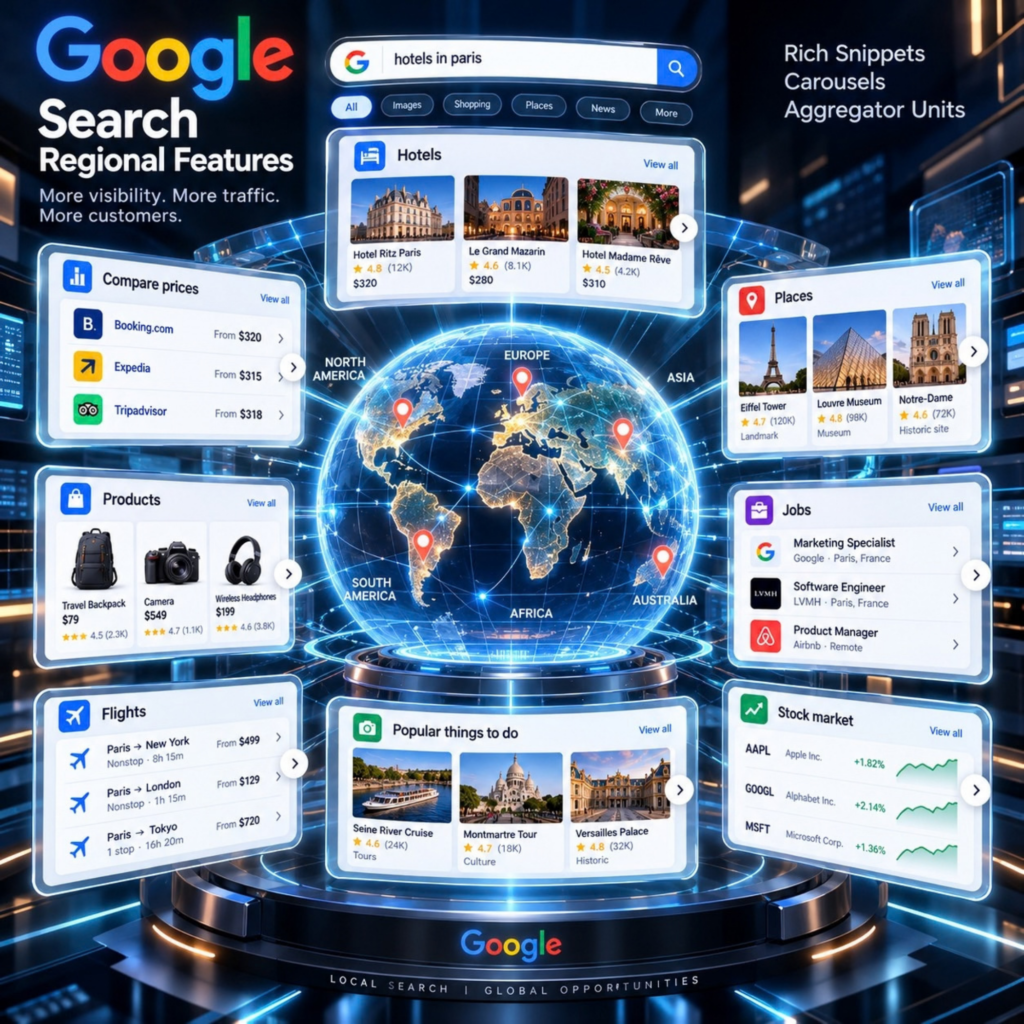
- Aggregator Units: Dedicated SERP modules that cluster top directory platforms, price-comparison engines, and multi-vendor booking services. Users can browse independent third-party platforms to compare rates for accommodations, transit, or retail products.
- Supplier Units: Designed exclusively for direct providers (e.g., an independent hotel, a regional airline, a direct-to-consumer apparel brand, or a bus carrier). This module enables users to initiate reservations or purchases directly with the source merchant without intermediary markups.
- Ecosystem Carousels: Placed alongside dynamic data widgets (such as financial stock trackers, weather feeds, currency exchange rates, sports scores, and translation modules), this unit highlights niche, authoritative resources that provide deeper industry reporting.
- Job Site Carousels: Triggered by employment-focused queries, this horizontal tray surfaces prominent job boards, career portals, and recruitment services, paired with top-level interactive filter chips to isolate hiring platforms.
- Places and Destination Carousels: Visual modules that surface curated guides, city directories, and travel publications for accommodations, restaurants, and tourism attractions within a specific municipality.
- Structured Data Rich Carousels: Interactive horizontal image-and-detail carousels built programmatically from a domain’s on-page markup, displaying real-time pricing, review aggregates, and inventory availability for products, events, and local storefronts.

Semantic Microdata (Schema.org)
- Required Markup: Implement
ItemListmarkup enclosing supported leaf types:LocalBusiness,Product, orEvent. - The Quantity Rule: Category or overview listing pages must contain a minimum of three distinct entities, each providing a direct link to its canonical leaf detail page.
Data Feeds, Direct APIs, and Formal Certification
- Accommodations: Submission of verified hotel inventory and pricing feeds.
- Transportation: Real-time API connections for transit and airline schedules.
- Retail Aggregators: Active participation in Google’s Comparison Shopping Services (CSS) program.
- Validation Requirement: Successful vetting and clearance as an accredited Vertical Search Service (VSS).
Expression of Interest (EOI) Applications
- Certain modules, including Job Site Carousels and Ecosystem Carousels, do not rely strictly on microdata or feeds. Instead, Google evaluates domain authority, editorial independence, and category-specific standing. Publishers must submit a formal Expression of Interest form to request inclusion.
Automated Algorithmic Crawling (Direct Suppliers)
- Small and mid-sized enterprises (SMBs) acting as direct providers (e.g., boutique hotels, local operators, single-brand retailers) do not need API feeds or application forms. Google automatically parses eligibility via standard indexing if the domain is fully crawlable, carries clear geographic targeting signals, and satisfies core user intent.

Hospitality and Travel: Aggregators must standardize room and pricing feeds to maintain accredited booking status. Direct hotels and rental operators must validate Hotel or LodgingBusiness schema, verify geographic targets in Google Search Console, and optimize booking funnels for direct Supplier Unit inclusion.
E-Commerce: Online stores and multi-brand catalogs must implement ItemList markup incorporating Product schema (price, availability, review ratings) to secure placements in rich product carousels. Marketplaces should audit and map feeds against CSS standards.
Recruitment (HR-Tech): Align job posting URLs with technical Google Jobs guidelines and submit partner interest forms to secure priority brand placement within job carousels.
Financial Data, Weather, and Informational Utilities: Reinforce E-E-A-T signals across author profiles, maintain low-latency rendering for dynamic data (exchange rates, market tickers), and apply for Ecosystem Carousel placement.

- Restaurants, casual dining, and food delivery platforms.
- Domestic and commercial trade services (automotive repair, beauty salons, HVAC, plumbing).
The traditional local 3-pack is transitioning toward a hybrid SERP where users can choose between booking directly with a single business or browsing aggregated directory comparisons via third-party platforms like TripAdvisor or specialized trade directories.
In high-stakes verticals—such as finance, healthcare, legal compliance, and complex B2B engineering—this dynamic carries heavy liabilities. Buyers select incompatible architectures, organizations implement non-compliant tax practices, and patients pursue counterproductive treatments based on hallucinated summaries masked by citation chips.

Audit Traffic Geography: Map your regional organic search footprint to identify which localized UI features Google activates for your target demographics.
Deploy ItemList Schema: Add valid ItemList structured data across category and listing pages, ensuring every list features at least three entities linking to dedicated child pages.
Validate Markup via Rich Results Test: Audit all updated templates using Google’s Rich Results Test to eliminate syntax errors or incomplete JSON-LD entities.
Format Structured Feeds: For directories and shopping platforms, format inventory and product feeds strictly to Google Merchant Center, CSS, or Lodging specifications.
Submit EOI Applications: If your platform operates as a specialized job board, niche travel index, or authoritative data publisher, submit an Expression of Interest via Search Central’s portals.
Strengthen Technical E-E-A-T: Ensure transparent commercial terms, verifiable physical addresses, unambiguous refund/pricing policies, and accredited author bylines across all indexable landing pages.
SEM MasterPlus: Clear and structured website promotion